Meldung vom:
Talc metasomatism of a magnesite body in response to a granite intrusion: Application of SmNd dating of metasomatic dolomite
Talc is an important industrial commodity, mined in deposits around the world. Apart from exploration and exploitation, there are also scientific questions regarding the formation of talc deposits open. In this work, we addressed the issue of a genetic relationship between granitic rocks and a body of magnesite (MgCO3). Using geochemical tracers and radiometric Sm-Nd dating, we could determine that granites caused influx of SiO2-rich fluids into magnesite and changed substantial portion of this body to talc. This talc constitutes now one of the larger European talc deposits in Gemerska Poloma in Slovakia. In addition, we were able to show that the granite body in this part of Europe, mostly hidden below the cover rocks, produced a number of ore and non-metallic raw material resources. For more information, consult https://doi.org/10.1016/j.lithos.2024.107521Externer Link
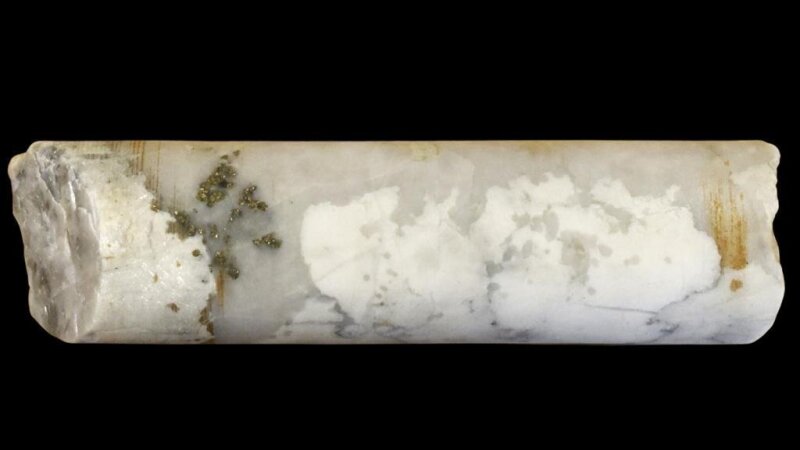
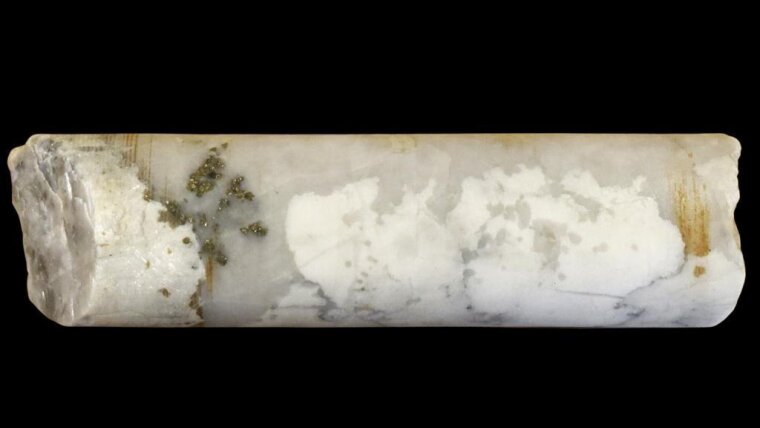
Drill core with carbonates (white), quartz (pale, transparent), and pyrite (yellow, metallic), a by-product of conversion of the rocks to talc.
Foto: Prof. Juraj Majzlan